SMC Admin - SP H1Test123

test 1

Missouri EHS Conference 2025

September 22 & 24, 2025

The Resort at Lake of the Ozarks
Lake Ozark, MO 

REGISTER

The Missouri EHS Conference brings together Environmental, Health, Safety and Sustainability resources and professionals for two days of networking, learning and information sharing. This event is content-heavy, with over 20 breakout sessions focused on equipping EHS professionals with the tools necessary to keep their employees safe while on the job and meet reporting and compliance requirements. 


Join our Safety Specialists at the EHS Conference in September! We're looking forward to meeting you, talking safety best practices, and handing out some SMC swag!

Register Below

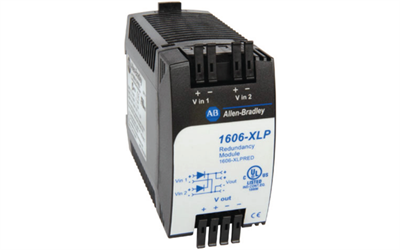
1606 Switched Mode Power Supplies

A compact size, light weight, simple mounting on the DIN rail and the quick connect spring-clamp terminals are what makes the 1606-XLP power supplies so easy to use and install in seconds. A rugged electrical and mechanical design as well as a high immunity against electrical disturbances on the mains provides reliable output power. This offers superior protection for equipment connected to the public mains network or exposed to a critical industrial environment. The 1606-XLP series offers output voltages from 5 to 56Vdc and a power rating of up to 100W. A DC-OK signal allows remote diagnostics. The supplementary decoupling diode module 1606-XLPRED helps you build redundant systems or protect against back-feed voltages.

Details:

  • AC 100-240V Wide Range Input

  • NEC Class 2 Compliant

  • Adjustable Output Voltage Efficiency up to 89%

  • Compact Design, Width only 45mm

  • Full Output Power Between -10°C and +60°C

  • DC-OK Signal Included

  • Large International Approval Package

  • DIN Rail Bracket for Wall or Panel Mount Included

  • 3 Year Warranty 


Shop the 1606 Switched Mode Power Supplies.


What’s Your Logistics Playbook for the Broadband Fiber Boom

Plan by Project, Not by Part

You’ve got crews booked, permits in hand  yet the project stalls. Why? A truckload of parts was delayed. The site lead burns hours rearranging tasks, the make‑ready window closes, and Friday’s crew spends half the day idle. Multiply that by ten fiber broadband build areas and you’ve just lost weeks. In a market where many providers build at once, logistics – not ambition – sets the pace.

1) What’s changing – and why logistics now sets the pace

More broadband builds are happening at once, which means more moving parts. Even with the bill of materials (BOM) locked and crews booked, jobs slip if the right items don’t arrive at the right place and at the right time. Logistics belongs at the design stage: assign ownership for each handoff and define performance in terms of if crews are building or waiting.

Key shift: Broadband Equity, Access, and Deployment (BEAD) funding and private capital increase activity, but rollout timing varies by state and can extend over multiple years. Practice scenario planning and keep flexibility in the chain.

Why this matters for Tier 2/3: Tier 2 and Tier 3 providers make up a large portion of the broadband marketplace but lack the deep, dedicated supply chains of national incumbents. When everyone builds at once, smaller operators will feel the shocks first. That’s why proactive logistics coordination becomes a competitive advantage.

If you don’t: missed in-service dates can trigger service-level agreement (SLA) penalties, grant/funding windows may slip, and field teams sit idle while fixed costs keep ticking.

Design‑stage logistics sets the playbook, but a playbook doesn’t move product toward you. You need a distribution partner that acts like an extension of your field ops – able to absorb schedule slips and keep crews building. That’s where treating distribution as a force multiplier comes in.

2) Use distribution as a force multiplier – not just a shipper

Direct-to-site shipping struggles when schedules shuffle. High-performing distributors add practical services that remove friction and protect labor time:

  • Kitting/repackaging (complete work packets per crew/task)

  • Palletizing & containerized site drops (organized arrivals, fewer on-site bottlenecks)

  • Rapid emergency fills (no sending technicians to hunt parts)

These services carry modest cost but safeguard field labor, your most expensive resource. Set clear service-level expectations up front and hold the distributor accountable.

How SMC and Panduit help: Our project optimization and fulfillment approach aligns manufacturing runs with your project phases, and our distributor partners pre‑stage kits so the bundle you need shows up when that project phase begins.

Those services only deliver when your installation partners can see what’s coming. Give the factory and distributor a rolling view of demand and they can pre‑stage the right materials in the right order – that’s the role of a 16– to 18-week signal.

3) The 16– to 18-week window: how to signal demand

Short, sporadic orders create waste and delay. A rolling 16– to 18-week view lets manufacturing schedule efficient production and lets distribution pre-stage what’s needed.

What to include in your signal:

  • Target locations/areas and phase sequencing

  • Stock-keeping units (SKUs) and quantities grouped as work packets (how crews will consume them)

  • Timing ranges (primary and alternate start windows)

  • Known dependencies/risks (permits, access windows, make-ready)

This synchronizes the factory’s cadence with the field’s pace.

4) Plan by project, not by part (how to operationalize it)

Piecemeal orders keep everyone guessing. Instead, provide a project-level plan: “Build Area X in Week Y using these SKUs.” That clarity lets manufacturing prioritize what ships when, and lets distribution stage complementary items for that specific phase.

Panduit’s project-level approach “tags” production for your job and coordinates distribution to your schedule so each crew receives the needed bundle when the work begins. If you don’t, you over‑order safety stock to feel “safe,” yet the wrong mix shows up on site; change orders spike; and crews bounce between tasks, inflating truck rolls.

5) Balance the system – avoid brittle or bloated inventory

  • Unbuffered just-in-time orders: one upstream miss cascades into field delays.

  • Hoarding/stockpiling: ties up cash and often leaves the wrong mix on the shelf.

Aim for transparent, rolling forecasts plus project-level staging. Keep inventory moving toward the job – treat it like cash you want working, not parked.

6) Measure what matters: crew productivity

Your workforce is the production line. If materials flow, output climbs; if they don’t, you pay people to wait. Keep track of when and where waiting appears (start-of-day, mid-shift, end-of-phase) and adjust staging, delivery cadence, or distributor service levels until idle time disappears.


Talk to an expert about fiber solutions. 

 

5 Principles for Unlocking Operational Resilience

Operational Technology is no longer an IT issue. It’s a business continuity mandate. As OT vulnerabilities and cyberattacks continue to escalate, the failure of security controls can directly translate into:

  • Physical safety risks 

  • Environmental incidents  

  • Financial and reputational damage

Effective OT security governance is the only way to translate strategic security priorities into reliable operational reality. This post will highlight the themes of OT security governance and five principles to keep in mind when designing the right governance model for your organization.

Adapting to a Changing Landscape

Security breaches are accelerating—and 80% of industrial companies are feeling the impact. The unfortunate reality is the threat landscape has transformed. AI-driven exploits now automatically identify and target OT vulnerabilities while zero-day threats bypass conventional speed. With AI and machine learning at the helm, the time to impact can accelerate by 100x.

Manufacturing still remains a top target for both nation-state actors and cybercriminals. And the escalation of threat sophistication combined with the ongoing shortage of OT security expertise results in a widening gap between resources and needs. 

This underscores why industrial organizations should adopt an OT governance model that can respond to these modern threats while making rapid progress in their security programs.

What is OT Security Governance?

OT security governance is the set of policies, processes, and practices that manage and protect industrial assets. It centers on defining who owns the risk and who has the authority to act. This ensures that security priorities translate into operational reality.  

How CISOs Can Balance Authority and Accountability

Two ways CISOs can balance authority and accountability include:

  • Strategic Governance ('Big G'): This includes setting the overall cybersecurity agenda for OT, establishing performance metrics, deciding who has the final say in risk management, and determining who is accountable in case of security incidents. 

  • Operational Governance ('Small g'): Here, the focus is on immediate decisions like patching devices, selecting cybersecurity tools, and managing equipment updates.

Navigating IT/OT Convergence in Security Leadership

The debate is no longer whether IT and OT should converge. It’s how to make that convergence work effectively.

Traditional IT security tools and approaches fall short in OT environments. This is due to their need for availability and protection without compromising uptime. Nonetheless, the increasing connectivity between IT and OT demands unified oversight.

Today’s critical questions have evolved beyond ownership:

  • How can CISOs effectively govern systems they may not fully understand operationally?

  • How do operations leaders acquire cybersecurity expertise when talent is scarce?

  • How can organizations balance the CISO’s enterprise risk view with plant managers’ operational imperatives?

  • Who makes the call when security best practices conflict with production requirements?

What Successful IT/OT Convergence Looks Like

The most successful organizations are moving past territorial debates to focus on collaborative models that use IT’s security expertise while respecting OT’s operational priorities. 

This often means the CISO provides strategic direction and risk frameworks while operations maintain tactical control over the implementation of timing and methods. The key is ensuring that whatever authority resides, it’s matched with appropriate accountability, resources, and contextual understanding of both cyber risk and operational impact.


Contact an expert to learn more about IT/OT security. 


Article Source: Rockwell Automation

Getting the Most out of Your Compressed Air System

Find information on making your compressed air system as efficient as possible.Full story

Simplifying Inventory Management | TraxMRO

We're uncovering all the secrets to a successful inventory management system.Full story

Unlocking Productivity with Collaborative Robots (Cobots)

Stay at the forefront of technological advancement with the newest in automation and robotics.Full story

Our experts at SMC are passionate about helping businesses of all sizes harness the power of automation without the headaches of complex integration. We achieve this by partnering with industry-leading brands, such as Doosan Collaborative Robots (cobots), to offer a safer, smarter, and more flexible way to automate your operations.

Why Doosan Cobots? 

Doosan cobots are designed to work alongside humans, not replace them. With advanced safety features, intuitive controls, and industry-leading precision, they help companies boost productivity, improve consistency, and reduce repetitive strain on workers—all while maintaining nimble and adaptable operations.
 

Little to No Programming Required

Gone are the days of needing a dedicated robotics engineer for every task. Doosan cobots integrate seamlessly with plug-and-play solutions that require little to no programming, meaning you can get up and running quickly and start seeing ROI faster.

Some of the innovative solution providers we work with include:

  • CLOOS – Advanced welding automation systems that deliver precise, repeatable welds with minimal operator intervention. Designed for high efficiency, CLOOS solutions reduce setup time and ensure consistent weld quality.

  • MARI – Flexible cobot solutions for both welding and surface finishing tasks, such as polishing and sanding. MARI uses 3D vision technology for true “no code” programming, with motion paths automatically generated by the vision system.

  • Paltz & Onexia – Streamlined palletizing systems that reduce manual lifting, speed up packaging, and improve workplace ergonomics.

  • CNCtender – CNC machine tending automation that keeps production running efficiently and reduces operator downtime.

  • Robochef SmartFryer – An innovative cobot-based fryer solution for the food industry, ensuring consistent cooking, improved food safety, and reduced labor demands.

Doosan’s Test Drive Program – Try Before You Commit

We understand that investing in automation can feel like a big step—especially if you’ve never worked with cobots before. That’s why Doosan’s Test Drive Program is such a game-changer.

With the Test Drive Program, you can try a Doosan collaborative robot solution in your facility before making a full purchase commitment. This allows you to:

  • Evaluate real-world performance with your actual parts, processes, and environment.

  • See firsthand how the cobot integrates with workflow.

  • Measure time savings, quality improvements, and productivity gains before you buy.

  • Build team confidence with hands-on experience.

The Test Drive Program is available for solutions such as:

  • Welding with CLOOS

  • Welding, polishing, and sanding with MARI

  • Palletizing with Paltz or Onexia

  • CNC machine tending with CNCtender

Built for Any Industry

Whether you’re in manufacturing, logistics, food service, or fabrication, Doosan cobots adapt to your needs. Their ease of use means they can handle one task today and a completely different one tomorrow, without costly reprogramming or downtime.

As an authorized Doosan Robotics distributor, SMC provides more than just hardware—we deliver end-to-end support, from needs assessment and solution design to installation, training, and ongoing service. With the Doosan Test Drive Program, you can move forward with automation knowing it’s the perfect fit for your operation.


SMC Tool: Josh Buchan 
 

Josh is SMC's robotics and mechatronics expert with 10 years of robotic and automation experience. He earned his bachelors degree in Mechatronics Engineering and has been using his knowledge to help SMC partners since 2023. His goal is to help our partners exceed expectations one successful solution at a time.


Talk to one of our specialists today to find out what cobots can do for you.